ロールアップの鍵は、初源的調整作用(Primary Control)にある
Apr 28, 2026最近、ロールアップに苦手意識を持つ zen place のクライアントの間で、私はちょっとした評判を得るようになった。
以前で、PILANDES トライアルでついにロールアップができるようになったJunkoのことを書いた —— 18年間、待ち続けた末の出来事だ。次のトライアルでは、さらに二人の候補者が現れた……
「10年間で一度しかできたことがない」「一度もできたことがない」
やれやれ、と思った。今度こそ、結果を出さなければ。
そして、結果を出した —— なぜなら、効果的なロールアップの鍵は、Alexander の 初源的調整作用(primary control)にあるからだ。指導者もクライアントも、よく聞いてほしい:
ロールアップは、頭の動きから始まる。力任せの収縮からではない!
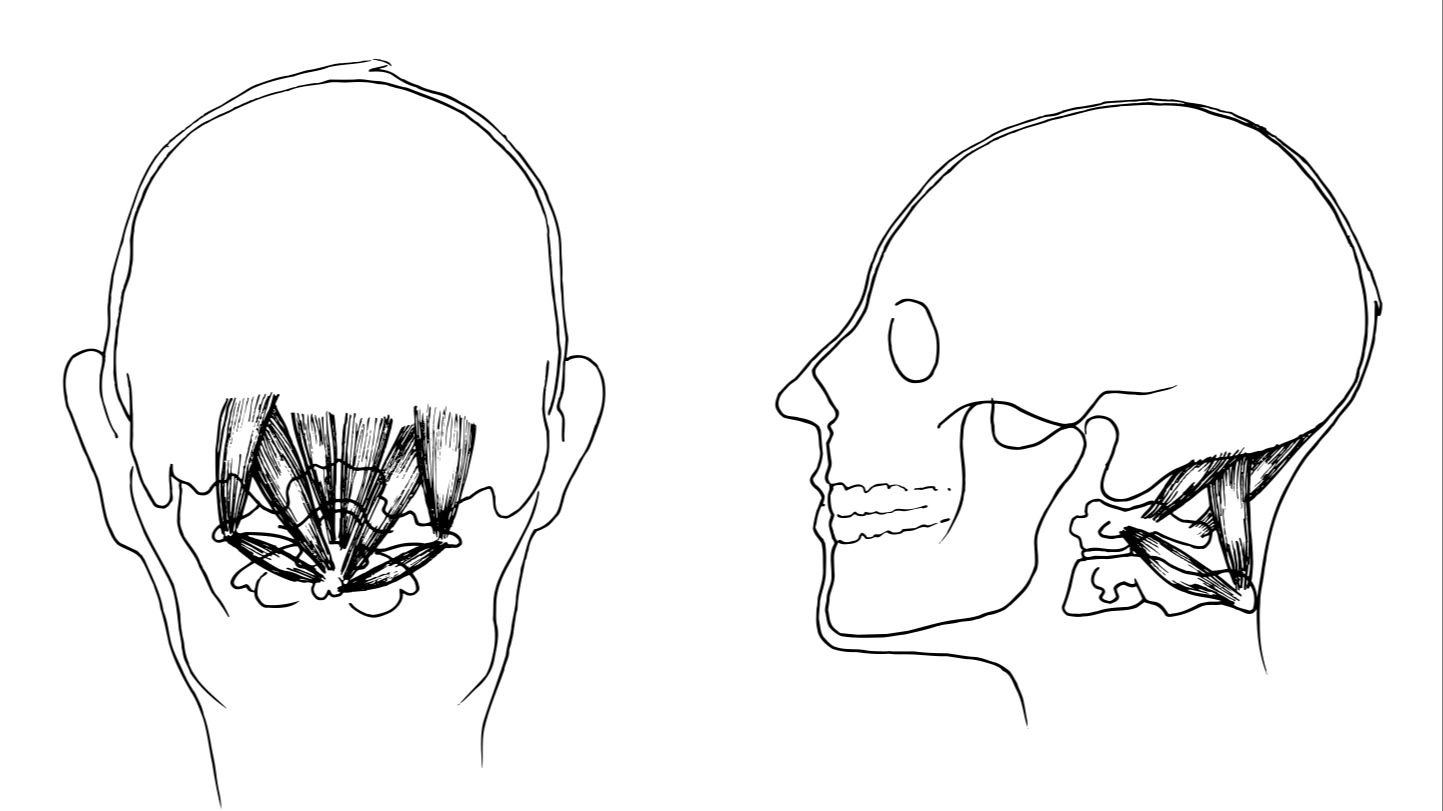
頭と脊椎のつながり方には、「後頭下筋群(sub-occipital muscles)」という総称で呼ばれる、並外れた筋肉群が関わっている(上図参照)。これらは短く、骨のすぐそばに位置する筋肉で、最初の2つの椎骨(アトラスとアクシス)上のさまざまな起始から、頭蓋骨の後頭骨の底部まで走っている。
私はこの後頭下筋群を長年にわたって探求してきた —— これらは未知の、隠れた感覚装置であり、動きの方向づけにとって欠かせないものだ。それを理解している人は、ほとんどいない。
あなたはこの筋群のことを、知っていただろうか?
Alexander が発見したのは、頭の動きが脊椎全体の協調を支配しているということ —— つまり、頭の方向づけは動きの一次的な組織者だということだ。このことは、フィットネス指導者が与えるよりも、はるかに大きな重要性をこれらの筋肉に与えている。さらに調べると、もうひとつの魅力的な事実が浮かび上がる:
後頭下筋群は、最も厳密な現代の基準で測定すると、人体全体の中で最も筋紡錘が豊富な筋肉群のひとつだ。筋紡錘とは、筋肉の内部に埋め込まれた小さなセンサーで、筋肉の長さとその変化の速度を脳に継続的に報告している。動きにおける身体内部のGPSと考えてほしい —— これなしでは、手足がどこにあるか、姿勢がどうなっているかを感じることはできない。
ロールアップが、わずかな頭の前傾から始まることがいかに重要か、もうわかるだろうか?
ロールアップを始める際にまず頭を前に傾けると、その方向がこれらの繊細な後頭下筋群に伝わる —— これが今度は、姿勢運動システム(PMS)に働きかけ、座り上がりを自動化するために必要な広範な筋肉のサポートを動員させる。
その代わりに、ロールアップができない人たちの身体では何が起きているかというと、随意運動システム(VMS)に由来する「努力」が、首の筋肉に大きな収縮を引き起こしている。残念ながら、これらの筋肉のほとんどは通常、屈曲ではなく伸展のために使われる。したがって、あなたは間違った方向を脳に伝えているのだ。
伸展の信号を送っておきながら、今度は屈曲しようとする —— 基本的に、あなたは自分自身と戦っている。途中で止まってしまうのも無理はない。毎回。10年間。18年間 —— そして、ついにその日が来る……
トライアルに来て、ロールアップをしながら Alexander の 初源的調整作用 に信頼を置くとはどういうことか、ぜひ体験してほしい。
大切なのは、キューイングであって、やることではない。
次回: 年をとっていると感じますか?
乞うご期待。
cheerfully
Jeremy Chance(ジェレミー・チャンス)
Director, PILANDES
Pilatesはあなたがすること。PILANDESはその方法。
www.pilandes.jp | zen place pilates course
***
[Original English]
The reason Roll Up fails is a wrong signal is sent to the brain. A tiny head tilt through the sub-occipitals awakens the entire Postural Movement System to the true purpose.
Primary Control III - Roll Up
These days, I am getting a reputation among zen place clients who struggle with Roll Up.
I wrote previously about Junko who had waited 18 years before she could finally do a Roll Up at my PILANDES Trial. Next Trial, two more candidates appeared…
“I have only done it once in 10 years” and “I have never been able to do it.”
Oh boy, I thought, now I have to deliver.
And deliver we did - because the key to an effective Roll Up is Alexander’s Primary Control. Educators and clients please take note:
Roll Up starts with a head movement, not a massive contraction!
The way your head connects to your spine involves an extraordinary group of muscles going under the general name of the “sub-occiputal muscles” (shown above). These are short, bone-deep muscles running from various origins on the first two vertebrae (Atlas & Axis) up to the base of the occiput bone of your skull.
I have spent years exploring these sub-occiputal muscles - they are an unknown, hidden sensory device of great power that very few appreciate as crucial to movement guidance.
Had you heard of them?
Alexander's discovery that his head movements governed his vertebral coordination - i.e. head orientation is a primary organiser of movement - obviously confers these muscles more significance than a fitness educator might give them. On further examination, we discover another fascinating fact:
Sub-occipitals are, by the most rigorous modern measure, among the most spindle-rich muscles in the entire human body. Muscle spindles are tiny sensors embedded inside your muscles that continuously report back to your brain on the muscle's length and how quickly it's changing. Think of them as your body's internal GPS for movement — without them, you'd have no sense of where your limbs are or what your posture is doing.
Can you see now how important it is for Roll Up to start with a tiny forward head tilt?
When you begin Roll Up by first tilting your head forward, you are signalling this direction to those sensitive sub-occipital muscles - this in turn directs your Postural Movement System (PMS) to recruit the extensive muscular support required to automate your sit-up.
Instead, what has been happening in those who fail at Roll Up, is a Voluntary Movement System (VMS) inspired “effort” causing massive contraction in the neck muscles. Unfortunately, most of these muscles are normally used for extension, not flexion. Therefore, you are signalling the wrong direction to your brain.
Having signalled extension, you then try to go into flexion and basically - you’re at war with yourself. No wonder you stop halfway. Every time. For 10 years. For 18 years - until the day, finally, you….
Well, come to a Trial and find out what it means to put your trust into Alexander's discovery of the Primary Control while doing a Roll Up.
It’s in the cueing, not the doing.
NEXT: Are you Feeling Older?
Stay tuned.
Jeremy Chance
Director, PILANDES
Pilates is what you do,
PILANDES is how you do it
zen place pilates course
21通のPILANDES手紙
ジェレミー・チャンスより
Pilatesはあなたがすること。PILANDESはその方法
個人情報は厳重に管理し、第三者への提供は一切行いません。