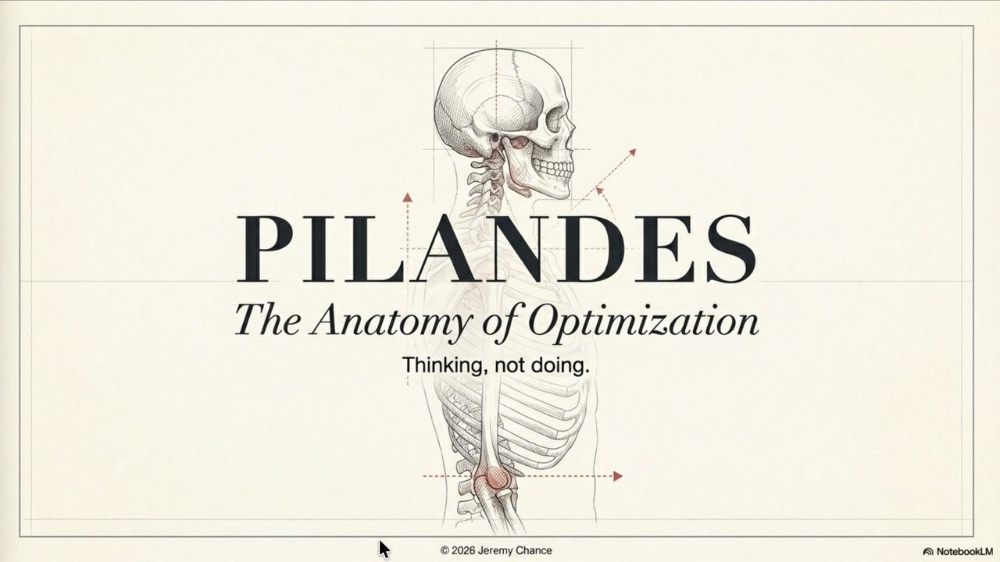
PILANDESのキューイングとピラティスはどう違うのか • How PILANDES Cueing Differs from Pilates
Apr 19, 2026
FM Alexander、語録、第118番
「努めてしようとすることは、私たちが既に知っていることを強調するにすぎない。」
***
筋肉に信号を送る脊髄経路は、いくつも存在する。
VOLUNTARY PATHWAYS(随意運動経路)
VMS(随意運動システム)は、随意運動のキューイングの主要経路として皮質脊髄路を使う。新しいピラティスのエクササイズを学ぶとき、あなたはこの経路を使って、さまざまな順序で筋群を活性化させている。
随意運動は、意識的な意図から生まれる。こう動こう、ああ動こうと、あなた自身が決める。これがピラティスをキューイングする方法だ。あるいは、自分についての錯覚的なイメージを筋肉の動きとして表現することもある。偽りの笑顔のようなものだ。何でもキューイングできる。
POSTURAL PATHWAYS(姿勢運動経路)
PMS(姿勢運動システム)は、脳幹経路を通じてディレクトする。脳の皮質下領域から発して、網様体脊髄路・前庭脊髄路・視蓋脊髄路を経由する。これらの経路は、常時存在する姿勢トーンを維持するために、筋肉を自動的にディレクトする。
姿勢運動は、変化する状況に応じて自動的に生まれる。5億年の進化がそうするよう設計したことを、このシステムが自らディレクトできるよう、あなたはその邪魔をしないことが大切だ。このシステムにあなたの助けは必要ない。
しかし、姿勢運動にはあなたの協力が必要であり、そうなっていないことがあまりにも多い。
キューイングの仕組み
レッグプルバックをやろうとしているとしよう。
両腕を後ろについて体重全体を支えようとする時、その力がないように感じるかもしれない。少し不安を感じて、随意システムへのキューイングを強める。
「もっと頑張れ、もっとやれ。」
この意識的なキューイングは皮質脊髄路を下り、腕が体重全体を支えるために設計されていない筋肉を動員する。この仕事はPMSに任せるべきなのに、そのことに気づかず、VMSへのキューイングを強めることで懸命に取り組もうとする。すると努力の感覚が増すため、「これで体を支えるパワーが増えた」と思う。しかし実際は、そこで起きている収縮のほとんどは、あなたを最もよくサポートする動きではない。
キューイングの問題
今日、私たちは二つのシステムの使い方を混同している。これこそアレクサンダーが発見したことであり、PILANDESが明確に取り戻そうとしていることだ。FMは声を失ったのは、キューイングの誤りが原因だった。声を取り戻す過程で、FMは私たちの動きについての独自の知識領域を明らかにした。
PILANDESでは何をするのか
まず、5つの姿勢関節を中心とした動きをディレクトすることで、PMS(姿勢運動システム)があなたをサポートするよう設計されていることを学ぶ。PMSのサポートは、異なる部位(頭・胸・骨盤・腕と脚)が5つの姿勢関節を中心にそれぞれ特定の一方向へとピボットすることで生まれる。姿勢運動の興味深い特徴は、この一方向性だ。アレクサンダーはそれを「方向づけ」と呼び、こう述べた。
FM Alexander、語録、第16番
「正しい位置なんてない、しかし正しい方向づけというものはある。」
「正しい方向づけ」に慣れてくれば、その適用は十分にシンプルだ。
次に、この理解を応用して、自分の「余分な努力」がPMSのこの一方向ディレクションの能力を許しているか、それとも妨げているかを見極めていく。
もちろんこれには時間がかかる。PILANDESマットコースで学ぶのは、まさにそのことだ。
PILANDESなしでは何が起きるのか?
5つの姿勢関節を知らなければ、レッグプルバックでより多くの力を入れようとした結果、たとえばウィング関節(胸鎖関節)で収縮・下制が起きる可能性がある。その結果、あなたは腕を体幹に対してより力学的に不利な位置へとキューイングしてしまっている。PILANDESを学ばない限り、それには気づかない……
しかし、感じることはできる!
レッグプルバックが異様にきつく、非常に不快に感じられる。これは通常、PMSによるサポートを許せていないサインだ。
ほぼすべての受講生が、PILANDESによるアジャストメントの後、エクササイズがずっと軽く楽になったと報告する。PMSのサポート能力を妨げる随意運動のキューイングをやめたからだ。
アレクサンダーはこれらのPMS運動を発見し、「初源的調整作用(primary control)」というものが存在すると語ることを好んだ。そして、この根底にある「方向づけ」が生活のあらゆる領域において健康と幸福を促進することを、経験的に示した。
「証拠はプリン(料理)の中にある」——つまり、PILANDESの方法でピラティスエクササイズをキューイングする体験の中にある。私のPILANDESマットコースのセッションを見学しに来てほしい。違うキューイングを体験する機会を、あなたに必ずお約束する。
キューイングの中にある、動きの中ではなく。
次回:アレクサンダーの「初源的調整作用」とは何か?
[Original English]
How PILANDES Cueing Differs From Pilates
"Trying is only emphasising the thing we know already." – FMA Aphorism #118
***
There are many different spinal pathways that signal your muscles:
VOLUNTARY PATHWAYS
Your Voluntary Movement System (VMS) uses the corticospinal tract as its primary pathway for cueing voluntary movements - when you learn a new Pilates exercise, you are using this pathway to activate muscle groups in various sequences.
Voluntary movements arise from your conscious intentions - you decide to move this way or that. This is how you cue Pilates. Or you might even cue your illusory self-image into muscular activity. A bit like a false smile. You can cue whatever you want.
POSTURAL PATHWAYS
Your Postural Movement System (PMS) directs through brainstem pathways, arising from subcortical locations in your brain: reticulospinal, vestibulospinal, and tectospinal tracts. These pathways automatically direct muscles to maintain your underlying, ever-present postural tone.
Postural movements arise automatically in response to changing conditions. You want to get out of the way of this system so it can direct what 500 million years of evolution designed it to direct. It doesn’t need your help.
However, postural movements do require you to cooperate, and too often we don’t.
THE WAY CUEING WORKS
Say you are trying to do Leg Pull Back.
When you place your arms behind you to support the full weight of your body, you may feel like you don’t have the strength to do this. You feel a little anxious, so you increase your cueing to the voluntary system:
“Work harder, do more.”
This conscious cueing travels down the corticospinal tract to recruit muscles that aren’t designed to assist your arms to support your full body weight. This work is best left to the PMS, but you fail to realise that and instead try harder by cueing more through VMS. Then you feel more effort, so you think: “Now I am using more power to help me stay here” even though most of the contractions aren’t actually the actions that will support you best!
THE CUEING PROBLEM
Today, we confuse the way we use each system - this is what Alexander discovered and what PILANDES brings back into clarity. FM lost his voice because of his miscues. While restoring his voice, FM uncovered a unique area of knowledge about how we move.
WHAT HAPPENS IN PILANDES?
First, you study how the Postural Movement System (PMS) is designed to give you support by directing movements around the 5 Postural Joints. PMS support happens because different areas (head, chest, pelvis, arms & legs) pivot around the 5 Postural Joints in specific unidirectional ways. A fascinating feature of postural movements is their unidirectionality. Alexander called them “directions” and framed them this way:
“There is no such thing as a right position, but there is such a thing as a right direction.” FMA Aphorism #16
It’s simple enough to apply as you become familiar with your “right direction”.
Second, you apply this understanding to identify whether your “extra effort” is allowing or suppressing your PMS’s ability to direct these singular directions.
Of course, this takes time, and on the PILANDES Mat Course, this is what you will study.
WHAT HAPPENS WITHOUT PILANDES?
Without knowing about the 5 Postural Joints, your decision to put more effort into Leg Pull Back might cause you, for example, to retract and depress at the Wing Joints (sternoclavicular). The result is that you have cued your arm into a less mechanically advantageous position in relation to the torso. Unless you study PILANDES, you don’t recognise this…
But you feel it!
Leg Pull Back feels extra hard and is very uncomfortable to do. This is usually a sign that you are not letting PMS support you.
Almost universally, students report that after a PILANDES adjustment, their exercise feels much lighter and easier to do. This is because you have ceased to cue voluntary movements that suppress the PMS’s ability to support you.
Alexander discovered these PMS movements - he often referred to a “primary control” being in existence - and empirically showed that these underlying “directions” promote health and well-being in all areas of your life.
The proof of the pudding comes from the experience of cueing your Pilates exercise in a PILANDES way. Come along to observe a session in my PILANDES Mat Course and I promise you an opportunity to cue differently.
It’s in the cueing, not the doing.
NEXT: What is Alexander’s Primary Control - Part I
21通のPILANDES手紙
ジェレミー・チャンスより
Pilatesはあなたがすること。PILANDESはその方法
個人情報は厳重に管理し、第三者への提供は一切行いません。